
Surfaces That Handle Daily Wear Patterns
Tile Installation and Remodeling in Loveland for kitchens, bathrooms, and flooring where moisture resistance and long-term durability matter
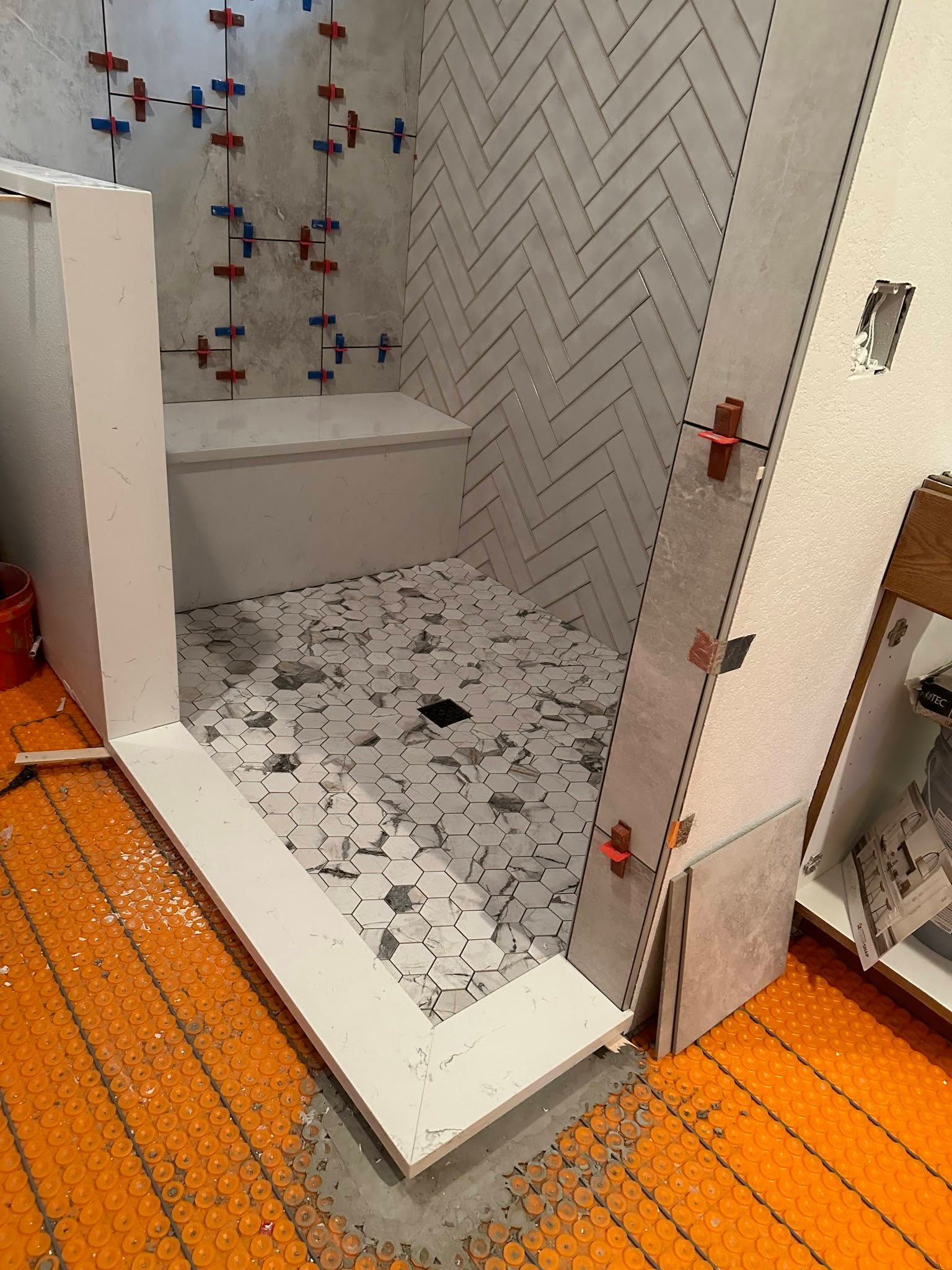
Tile installations fail when substrate preparation gets skipped—backer board must sit flat and secure before any tile goes down, or grout lines crack as the underlying surface flexes. Homeowners need professional tile work when outdated surfaces show water damage, when remodels require materials that resist bathroom humidity, or when high-traffic kitchen floors need surfaces tougher than vinyl or laminate. DJ Contracting installs tile in Loveland homes by working with porcelain, ceramic, natural stone, and specialty finishes, matching material hardness and slip resistance to where the tile will actually be used.
The process requires cutting existing flooring to subfloor level if necessary, installing cement backer board over joists or existing solid surfaces, and using thin-set mortar rated for the tile weight and substrate type. Layout starts at room center or most visible sightlines to avoid narrow slivers at edges, and tile spacers maintain consistent grout joint width. Cuts happen at walls and transitions where partial tiles become necessary, and waterproof membranes go under any tile in wet areas before mortar application.
Schedule a consultation to review tile options based on room function and existing subfloor conditions.
What Proper Installation Requires
Substrate flatness determines whether tiles remain level across the floor—low spots cause lippage where tile edges sit higher than adjacent pieces, and high spots prevent full mortar contact that leads to hollow-sounding tiles that crack under impact. Grout type varies by joint width and exposure to moisture; sanded grout fills wider joints without shrinking, while unsanded grout works for tight spacing between rectified tiles. Sealing natural stone prevents staining from spills, and slope requirements in showers direct water toward drains without pooling.
You'll notice finished tile floors that feel solid underfoot without flexing, grout lines that run straight across the room, and uniform reveals around fixtures and transitions. Water sheets toward drains in tiled showers rather than collecting in corners, and edges meet walls or transitions without gaps that expose substrate. Tile surfaces clean without grout discoloration, and sealed stone resists absorption from common household spills.
Pattern complexity affects installation time—herringbone and diagonal layouts require more cuts than straight grid patterns, and mixing tile sizes in a single installation demands precise spacing calculations. Some tiles require special handling; large-format porcelain needs specific thin-set formulations to prevent bonding failures, and natural stone varies in thickness enough that leveling systems become necessary during installation.
Homeowners planning tile projects want to understand material differences and how installation details affect final results.
What Property Owners Usually Ask
What tile materials work best in Loveland bathrooms?
Porcelain and glazed ceramic resist moisture penetration better than natural stone, which requires sealing to prevent water absorption, and textured surfaces provide slip resistance in wet areas where smooth tile becomes hazardous.
How does subfloor condition affect tile installation?
Subfloors must be rigid enough that deflection stays below industry limits—bouncy floors crack grout and break tile bonds, which sometimes requires adding blocking between joists or installing thicker backer board before tile goes down.
What determines grout joint width?
Tile type and size guide spacing—rectified tiles with precise edges allow tighter joints, while handmade or natural stone tiles need wider grout lines to accommodate size variation and create visually consistent patterns.
When should tile sealing happen?
Natural stone and unglazed tile get sealed after grout cures fully, typically 72 hours post-installation, and resealing intervals depend on surface traffic and exposure to moisture or staining agents.
How is tile matched to existing surfaces during partial remodels?
Dye lots vary between production runs, so matching discontinued tile often requires sourcing from specialty suppliers or adjusting layout to use contrasting accent tile at transition points where exact matches aren't available.
DJ Contracting handles tile installation for remodels, upgrades, and new construction projects where material selection and precise installation determine long-term performance. Set up a project discussion to explore tile types and layout options suited to your specific application.